Saturday, July 8, 2017

Just the ugly

The good the bad… no… just the ugly: 

A cautionary tale


I have been writing about music, creativity, and magic, along with odds and ends of living outback, for over 5 years. I also maintain social media accounts for clients, which means that I'm connected to those sites all day every day. Before that I was a researcher and non-fiction writer-for-hire, and thank the gods for internet and its research resources.

I work from home. I live out in an area so remote, so unpopulated by humans, that some federal agencies call it "frontier". Suits me just fine. Except... when you live in truly rural America you discover they are out to get you.

I don't mean the feds or aliens. This is not that kind of a tale.

This is a story of taking advantage. It's about internet satellite. This is a typical story about what happens to those who have no alternatives. You don't have to be poor or homeless, you just have to be an outlier, a demographic that contains few enough members that Big Business sees a great opportunity to suck victims dry.

I've been on satellite internet for fifteen or more years now. Before that – dialup. Really. It was horrible. I was always calling the phone company to complain, but as it turned out, the phone company was for sale and they weren't interested in upgrading their outmoded equipment. I still cringe when I hear that dialup sound when someone uses the FAX machine at the library.

Thus, as soon as I learned about satellite internet I lusted for it. A couple years after Starband began offering services in the US I signed up. I stayed with them, no matter how crappy their service (and it got truly crappy at the end) until they turned off the signal in September 2015.

September 2015. OMG!

If I had thought Starband was bad, that's only because I had never used HughesNet.

Let me explain. DSL doesn't reach me here in my part of New Mexico. I don't get a cell signal on my property because I'm in a valley.  The nearest cell tower is far enough away anyway that neighbors who do get a signal have their own problems because of the distance.

Cable? Bwahahahaha! Is there even cable anywhere in New Mexico? Heck if I know.

Satellite internet is all there is for folks like me. I don't think a person could even access email using dialup anymore. Maybe I'm wrong about that, but I don't want to find out.  When Starband announced that they were going out of the ISP business, HughesNet was about all I could get if I didn't want DIRECTV, and believe me, I did not want DIRECTV.  I don't do TV.


Enter, HughesNet

HughesNet offered their Gen4 service at a cost of about twice as much as other people with "real" internet had to pay for equivalent service (for the record, I was paying just under $100/month). For that, I got a metered allowance of 9MB per month of data, beyond which they'd FAP me (no, not what you think! FAP = Fair Access Policy, i.e. being throttled back or, as we victims put it, "molasses mode": adequate for email but forget accessing the web). Think dialup without the modem noise.

To avoid the FAP fate I could monitor and constrain my use or I could pay for outrageously expensive "tokens" that gave me more bandwidth. HughesNet's "fair access" clearly meant I could have as much bandwidth as I wanted, as long as I was willing to pay for it through the nose. How that is "fair" to everyone stuck with satellite internet is beyond me, but in any case I paid for tokens and kept them in reserve, pretty much getting along just fine on 9GB per month. I couldn't stream movies or TV, had to wait for YouTube videos to buffer (though that didn't always work, and let me tell you, start-stop-start-stop of YouTube, Facebook, Vimeo, and other videos is absolutely maddening). I couldn't stream music. Skype was out of the question. Most web pages loaded slowly and some not at all, but oh well. I had internet.

But right away I started having problems. The first sign was service disruptions, always at the same time of day, for days or weeks in a row, and then it would stop. In the beginning I called HughesNet. (Ironically, both internet provider companies I've used provide no way to reach them digitally). I had to constantly ask "Bob" or "Terry" in India to repeat themselves, as I couldn't understand them. To their credit, most of the techs I talked with were polite, but they weren't actually helpful. I dreaded the ordeal. I hated that somehow it was always a problem on my end, never on HughesNet's.  Funny, but when I learned to simply call HughesNet, let their automated answer do the "system check" and hang up, that would often fix the problem. Temporarily.

Then, in April of this year I started having not just service interruptions but also slow-loading or no-loading pages, to the point where I just couldn't work.  Coincidentally (or not), HughesNet's Gen5 came out in April and suddenly the fix for my problem was an upgrade to Gen5. "5X faster internet, Built-In Wi-Fi, and more Data" (copied and pasted directly from an email they sent me).


Now for the ugly

More data turned out to be 1GB more per month than I was already getting, but for less money/month and hey, "5X faster". That sounds pretty good, right? The tech I talked to told me that if I was getting along on 9GB before, 10GB would probably be fine, and besides, I could just upgrade if I needed to. He assured me that my pre-paid tokens would carry over.

Uh huh. I should know by now that those conversations need to be recorded. I upgraded. Bye-bye tokens.

Since "upgrading" to Gen5 my bandwidth use has mysteriously become much higher – extraordinarily higher - than with Gen4 even though I have not increased what I do on the internet. This billing period I looked at my HughesNet data meter a few days into the billing cycle and was shocked to discover how much bandwidth was already gone. I would clearly use up the allotted 10GB before I was even halfway through the cycle. I thought I had some kind of malware sucking the bandwidth. I ran scans, found nothing. I turned all my devices to airplane or powered them off. I always turned off the modem at night, now I did it whenever I went out of the house. I cut back on YouTube videos (which has put quite a cramp on my writing about music), made sure my ad blockers were working, made sure auto-play, auto-download, auto-anything was turned off.


Surprise! Nothing made any difference

Then I started researching and found out something I should have seen right at the beginning. I didn't pay attention to where HughesNet says that if I was on social media sites one hour a day I would use up all my bandwidth for the month with 10GB of Gen5.  That means no other use: no email, no browsing, no movies, no nothing.  Just ONE hour of Facebook a day.

ARE YOU KIDDING? It takes 10GB for Gen5 to deal with 30 hours of Facebook a month? What is HughesNet's Gen5 really doing? Why is Gen5 so data consumptive that what before used 9GB/month suddenly now requires double or triple that amount?


Customer = victim

HughesNet's solution to my problem? Cut back on my usage or upgrade. I have cut back. It doesn't make any difference except to make it harder to work and to make going online an unpleasant experience. And realistically, how could cutting back work if only an hour a day of social media consumes10GB of bandwidth a month? Why would I even consider upgrading, when all it would do would be to reward Hughesnet for creating a data sucking monster like Gen5?

From the user end it sure appears that HughesNet has set it up so that everything Gen5 customers do costs multiple times as much bandwidth as it did before. It is NOT helpful to say that because Gen5 is faster more data can be used in the same time period and that's where the bandwidth is going. Usage shouldn't suck up two, three, or more times as much bandwidth with Gen5 as it did with Gen4 if what people are doing on the internet is the same. If a person gets 100 emails a day with Gen4, then just because Gen5 serves up the 100 emails a day faster shouldn't mean multiple increases of bandwidth consumption.  If a person goes to a school or a government website or, for that matter, HughesNet's own website, it shouldn't cost more bandwidth to do that with Gen5 than Gen4.  If a person turns on the computer it shouldn't cost more bandwidth to do that with Gen5 than Gen4.

But it does.

So that got me to wondering. Why is "fair access" only a one-way street? How is it fair for HughesNet to run the meter faster for their Gen5 data use compared to GEn4, or to other ISPs for that matter, and why is it fair to avoid clear disclosure of the greater consumption of bandwidth by blaming the consumer for the consumption? How is it fair that we can't just dump HughesNet for their unfair business practices and go with a competitor because we're locked into big-penalty contracts and no one will listen to reason?

What I see here is HughesNet taking advantage of consumers that can't do a thing about it. Fair access, indeed.


Victims can fight back

I've tried getting answers on HughesNet's community forum, but all there is there is how we all are flagrantly using bandwidth and we need to cut back or upgrade. Perhaps it is time for each of us to consider filing FCC Consumer Complaints*.  At the very least, we can contact elected officials. They should care about this because our jobs depend on internet access, our kids need to get online for school, we need internet access just as much as people who live in cities. And hey, we may be few but we are voters.

Also, every state has enacted consumer protection statutes, which are modeled after the Federal Trade Commission Act. This allows state attorneys, along with general and private consumers, to commence law suits over false or deceptive advertisements, or other unfair and injurious consumer practices.

I don't think anyone out here in the frontier would grumble that much about having to pay more for satellite internet. After all, everything is pretty much more expensive here. But Fair Access should go both ways. HughesNet, don't make us get ugly about this.


* Note that HughesNet does not allow the use of "FCC" on its community forum -- a bot won't allow you to post if you try to provide a link to the federal agency that has oversight for internet.  That alone is food for thought.

Wednesday, May 17, 2017

Coming soonish to a bookstore near you

Coming soonish to a bookstore near you: Well, okay, not soonish. Maybe digitally in a few months, but in print... next year at the earliest.  I don't care - I'm so jazzed!

Because... this is how it begins.

Wednesday, May 3, 2017

Writing tip: Don't get writer's block!

It's easy to become discouraged when it comes to writing. The more a writer doesn't write, the more discouraging it gets. It grinds you down until you can't get a single word out. And then the worst. You realize you've contracted that deadliest of diseases: Writer's block.
Don't let writer's block happen to you! Take action now! Tell your doctor about.... 

Seriously - there is an almost magical thing that can cure you. That thing isn't abracadabra, it's deadline.

As it happens I've spent most of the last 17 years as a non-fiction writer, working for people with deadlines. Deadlines are tough. If I screwed up on my deadline I'd screw my client's deadline. Out in the real world, that can make or break a writer. Miss just one deadline and a client might go looking for someone else. Reputations take a long time to build but it takes just one flubbed deadline to ruin. Tough as the demands of deadlines are, I nevertheless grew to appreciate the value of having time constraints imposed on me. It meant I didn't have time to become discouraged because I had to write.

But then I decided I wanted to write fiction.

Things are different when you're home alone writing a story or a novel for yourself instead of for a client. Suddenly there are no deadlines. What a luxury to be able to write without the pressure! Unfortunately, believing there's a lot of time to write can end up as an excuse to put off doing any actual writing. When the day is done and there are no new words on the page it can be discouraging. When that happens the next day, and the next, well, you know what happens. Nothing.

Writer's block: it's real, but it's self-inflicted. It's kind of like push-starting a car. Getting those wheels rolling is hard, but once the vehicle's moving it's not so tough to keep it moving. There's even a natural law about it and that kinda sorta applies to writing, too.

When it comes to writing, you have to write to keep writing. Once you've started, do not stop!

Even writing on social media has value for a writer if it's more than emoticons and one-word comments. For me, writing about writing (as I am here), promoting myself as a writer, launching a Patreon account (it's coming soon!), and getting a professional editor to review my work gives me that deadline feeling. So does belonging to writing groups and having first readers I've promised a next chapter by such and such a date.

So when I find myself doubting, when I sense that discouraged feeling, I've found the very best thing I can do is sit down and just write something. Anything. A blog post, even. I drum up that deadline feeling and I push myself to get it done. Pressure. It's the magic cure.

♪ Under Pressure (Queen, with David Bowie)


Sunday, April 30, 2017

Not just your mother's potato salad

Making certain old standard dishes at my mother's house is a risky business. You know the dishes in question -- comfort foods, the dishes that always remind you of home and family and good times (whether they were truly good or just in selective memory). These foods vary from culture to culture, from family to family. For me, it's turkey stuffing, mac and cheese, meatloaf, bow ties (a vaguely Italian dish named for the pasta that is used), potato salad. These are foods that never taste quite right at your best friend's house, or the way your mother-in-law or your neighbors make it. No restaurant makes those dishes properly.

These are the dishes that you want to make just like Mom made. These are the dishes that give meaning to the phrase "you can never go home again".

It is potato salad of which I write.

Let me start in the beginning, which is the logical place to start. Logic ends with that point.

It had been springtime here in New Mexico. I could tell because the calendar said it was late April. Not only that, but one of my apple trees had blossomed (unfortunately not the self-pollinating tree). It was a glorious display. My asparagus had sent up the first spears and I greedily ate the raw shoots moments after harvesting, because that's what you do with the first asparagus. Birdsong filled the air as they hunted for mates, flies buzzed around the horses, and the horses' tails were working as their winter coats flew off, hair by hair, into the warm breezes.

Definitely spring.

One afternoon when it was almost hot and felt kind of summerish, I got the notion that I had to have potato salad. Just like Mom used to make -- the only way it can be made, after all. The next time I went into town I bought a bag of organic Yukon golds. I couldn't make the dish right away, as I had to be out and about too much over the next few days, so I stored the potatoes in a cool, dark place till I needed them.

For three days I thought about potato salad, because it was spring.

Then it wasn't. New Mexico changed its mind. The thermometer dropped to 10° overnight. A frigid wind blew through my valley straight from the North Pole, not even pausing at the spaces in the wall of my cabin. I had to build a fire in the wood stove, the first time in weeks. Fortunately I hadn't gotten around to moving the logs outside yet. Procrastination does have value.

By morning there was a few inches of snow, and though the sky was blue at that point it clouded over shortly and snowed again. Several times.


Somehow the notion of making a batch of potato salad wasn't as attractive as, say, a hot pot of thick potato soup. Not that I made the soup. I made cornbread instead, but that's another story.

Springtime again... maybe

And thoughts returned to potato salad. I decided to go for it.

Mom's recipe is pretty simple, but it must be exactingly followed. That's the risky part about making one of these family recipes if you're at Mom's house. She wants it to be made just like she has always made it. And so does the rest of the family. No fooling around. No experimentation. Just tried and true.

Well. 

If you've read other stories of my cooking here, you no doubt are aware that following directions is not exactly my thing. I wasn't at Mom's and what she didn't know wouldn't hurt her. Plus I didn't have all the ingredients.

I'm sure you're wondering how that could be, since I had been wanting the potato salad for a week and I had been to the grocery store in that time. I can only say that I didn't feel like buying mayonnaise. I rarely use the stuff and so any leftovers after making this recipe would just go to waste. I figured I could fake it. That's pretty much my approach to life anyway, so why not with potato salad?

Why go by the rules when you can invent something new? Choosing a route off the beaten path is always entertaining. Yes, there's the risk of getting lost, of attacks by dragons or saber-toothed tigers, of death rays and carnivorous plants, quicksand and... you get the picture. But adventure! Excitement! And the possibility of treasure.

No different with cooking, though that's just my opinion. I've had my failures (I just threw out a batch of sourdough that refused to rise and was sad that even after a second chance it chose to remain a lump of flour and water). I've had some dubious results that probably no one but me would like. But sometimes... treasure!

Okay, today's potato salad isn't everybody's treasure. For one thing, I don't put sugar in it, for another -- faked ingredients. But I did have potatoes. And celery. That was a good start, right?  The rest of the ingredients were what I had in my fridge and in my garden that survived the snow.

Ingredients (all organic)
  • 3 lbs gold potatoes
  • salt
  • celery
  • garlic tops
  • green onions
  • white vinegar (a couple tablespoons at most)
  • Icelandic yogurt (or other plain yogurt)
  • dill pickle juice (a couple tablespoons at most)
  • sour cream
  • black pepper, ground
  • olive oil (a couple tablespoons at most)
[EDIT: 05/01:  Last night I decided the recipe would benefit from some olive oil, since oil is one of the ingredients in mayo.  So I did add a splash or two and that gave a richer taste.]

Directions
  1. Boil potatoes till cooked but still firm - if you're going to want salt in your recipe, add some to the water. 
  2. Cut potatoes into little chunks when cool enough to handle. 
  3. Sprinkle a small amount of white vinegar over potato pieces and mix. Cover and cool, mixing occasionally so the vinegar will be absorbed uniformly.
  4. Chop celery into thin slices.
  5. Chop garlic tops into small pieces.
  6. Chop green onions into small pieces.
  7. Add the chopped ingredients and the rest to the potatoes when cool.  You'll have to experiment with quantities so add the yogurt, pickle juice, and sour cream in small amounts, tasting as you go.
  8. Chill before serving.
Note about Icelandic yogurt: It was in the grocery store and I hadn't seen it before. It had interesting stuff on the container including a list of all the nasty stuff that wasn't in it. It's thick, like Greek yogurt. I liked it and will get more.
My mother would not approve of my potato salad. She would taste it and be polite, but I know she'd be comparing to her own. Mine would come up a faint second best. But you know, I haven't lived at home for a long, long time. I've been making potato salad for decades and each time I make it I follow my own taste buds. At first my potato salads and all the other comfort food dishes did taste like Mom's. Over time they evolved. Sometimes the changes came about because I didn't have the exact ingredients, sometimes because I had no reference to compare to. Mom lives far away and I don't get to enjoy her cooking much anymore.

And you know, when I do go home and eat a meal there, I compare her dishes to mine. And I wonder why what she makes doesn't taste like it used to.


[EDIT 05/01/17:  Google for some reason won't let me comment or reply to comments on my own blog!  So don't assume because I don't reply that I haven't read your comments!]


Wednesday, April 19, 2017

Hopeless and helpless

This is my desk. I didn't set it up for the shot. It is what it always is, except that occasionally things get moved or replaced.

Over on the left almost out of the picture is bottled Starbucks coffee. In the morning it'll be brewed coffee, with the bottle for later if the French roast wasn't enough. If I develop caffeine jitters I'll change over to room-temperature weak green tea till it's time for my evening glass (or two or three) of Merlot. Unless it's a hot day and then maybe a beer, though not often 'cause I'm not much of a beer drinker.

You'll note the coffee is sitting on top of my day planner. I'm very good at writing things down in the planner, not so good at paying any attention to what's scheduled. Quite often there are coffee rings on the pages. I can't explain it, but there's something about the warping of a day's page from the dampening and drying that I find attractive.

Behind the planner and the coffee is my Kindle. Mostly it's off, but there's always one app running in the background -- it's called Ship's Clock and it's the coolest thing ever. It chimes every half an hour, emulating the old fashioned sound of a ship's bell that regulated the sailors' duty watches (do ships still use those bells? I don't know). It took me a long time to learn how to tell time with it but I can do it now. Except that if I don't pay attention I don't even hear the chimes. But I like it anyway.

I've got an atomic clock because otherwise I'd never know what day it was, or month, or the date. I have to check that clock before I look at the calendar on the wall because come on, if you don't already know what day it is how can you tell from a calendar on the wall? Sometimes I need to know what time it is in between bells, too (and yeah, sometimes I need to know what time the bells are supposed to be telling me).  The atomic clock provides temperature too, but my laptop's fan blows on it so it's not reliable. Besides, I'm sitting in the house -- I can feel what it feels like in here without help.

Vitamins and other supplements. Those are empty bottles waiting for me to remember to reorder. I really should get around to it.

Rune stones. Why? I don't know. They seem cool. I'm no good at reading them (or tarot cards or any such predictive tools), but I could learn if I keep at it long enough. After all, I learned the ship's clock. The meanings of the runes are in my Kindle. Handy device, the Kindle. I hear a person can read books on it. Just kidding -- I do occasionally do that, but ewwww. Books on a little screen? Give me paper any day.

The laptop's on a metal stand. The theory is that the metal will help conduct heat from the laptop. Seems to me it gets awfully hot anyway. On either side and behind the the laptop are my speakers, and hidden behind the laptop is the monitor for my XP machine, which I can't quite convince myself to get rid of. To the right of the screen is the ailing, failing desktop computer tower. It's hard to see because of the stuff leaning against it. I do remove it all if I turn the old computer on, but that happens less and less anymore.

Do you see the cute koala bear peeking up from behind the papers? I don't recall where I got it but it has to live on my desk. I don't know why. Poor thing is buried in old mail and project binders. My theory is that if I have them nearby, I will someday open the envelopes or the binder covers. In practice I only do that when I get a threat about a bill that's due, or if a deadline for a project is fast approaching.

I've got a half dozen CDs waiting to be ripped so I can listen to them. I'm using MediaMonkey nowadays instead of iTunes. Mostly because I resent the lack of flexibility of iTunes. Apple so thinks it is better than everything else. Sorry, all I want to do is be able to find the music I've got in my computer and play it. I don't need your proprietary smugness, iTunes.

There's my daily journal and my moon phase calendar. There's a drawer under the laptop with a bunch of cables and lip balm. Somewhere under everything should be my Passport external drive. Hmmm. Haven't seen that for a while. But it's there, I'm sure.

The Writer's Market. But of course. Because someday I will actually need to market some of the stuff I write. But not today. Why? Because it's scary. Because it's hard. Because I have to clean my desk before I can get serious.


Tuesday, February 21, 2017

RIP Mr. Potatohead

Okay, to be truthful, this potato was always going to be sacrificed. I just thought it would be dinner, not compost.

This was my third try at baking potatoes in the ashes of the wood-stove. The first two were great, honest. This potato is hard as a rock and weighs next to nothing, just like a charcoal briquette.

I like the idea of baking potatoes while simultaneously heating the house and heating water. Wood stoves are great that way.

But let me be clear about this: Just because it's buried in ashes in the wood stove and you aren't paying for gas or electricity to bake it doesn't mean you can forget that it's there.

Thursday, February 9, 2017

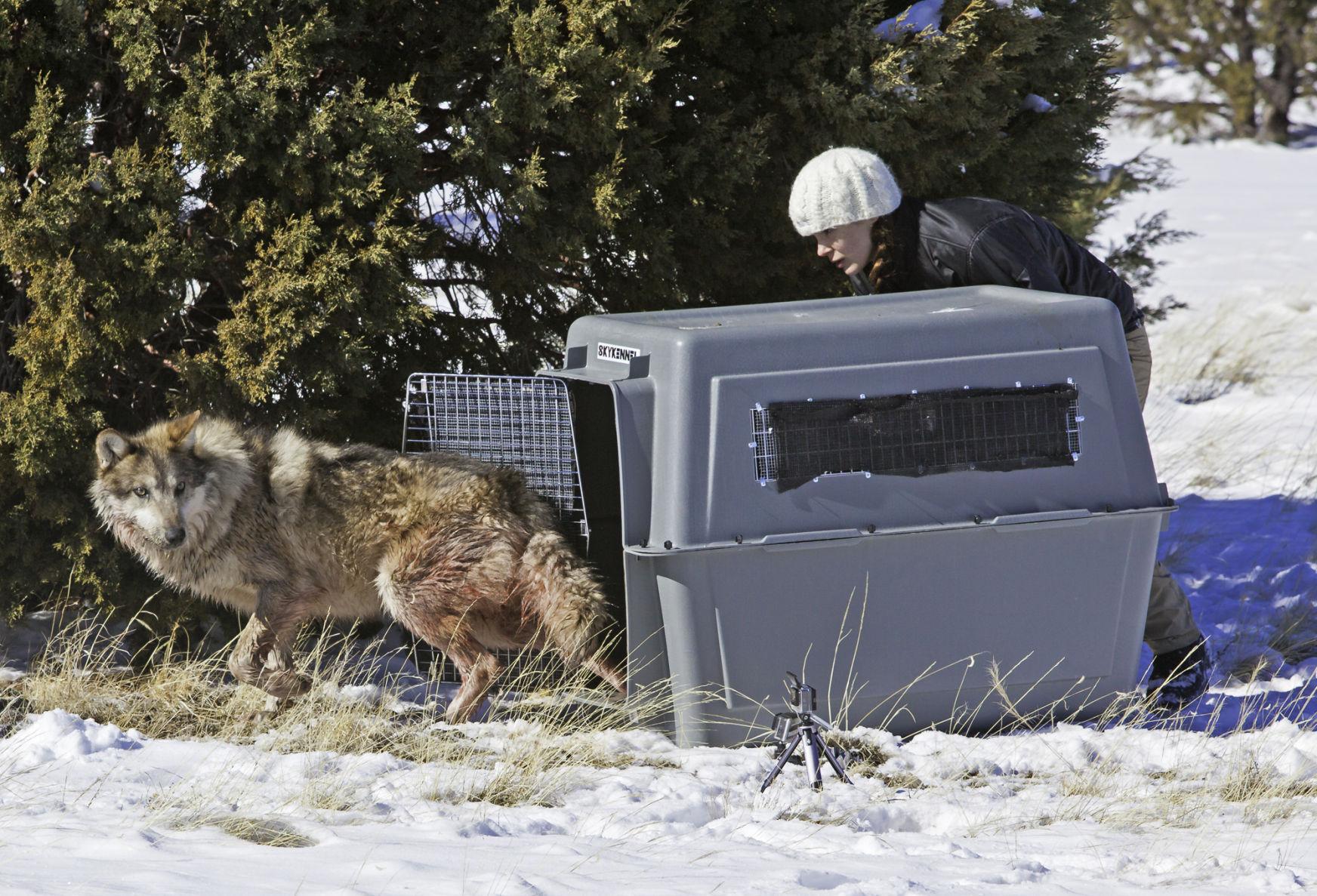
Mexican wolf program: Bound to fail, but not because of ranchers

Mexican wolf release 2017
photo: White Mountain Independent
These are not words that pro-wolf people like to hear, but they need to be said: The Mexican wolf program will fail. It was fated to fail right from the start.

Contrary to what some preach, it's not because of ranchers, or obstructionist local governments.

No, the program has been doomed from day one because of a false premise of biology, and a false promise to the public.

Background

In 2014 over 100 Mexican wolves were counted in the wild in New Mexico and Arizona. In 2015 there were fewer counted, but that doesn't mean that there were fewer wolves. By the nature of the methodology the count does not include all wolves. The count is performed by fly-over. A spotter plane finds a wolf pack, and the wolves are then counted from a helicopter. Obviously there is no way to get an accurate count with this method. Wolves don't stand still to be counted, they run every which way. Some may hide and not be counted at all. Some may be counted multiple times. Some wolves might simply never be spotted by the plane, especially those that are outside the official Mexican wolf area (like the ones that are in my area).

Whatever the count, Fish and Wildlife Service biologists say the number of wolves is too few to ensure a diverse gene pool for the species.  Environmental groups, like Defenders of Wildlife, say the release of captive-bred wolves is imperative to the genetic health of the wild Mexican gray wolf populations.

I say that no number of Mexican wolves will ever ensure a diverse gene pool.

You can't make something out of nothing.

Every single known Mexican wolf in the US, both in the wild and in captivity, is a descendant of a very limited gene pool of captive wolves. I do not know what the genetic spread of the Mexican wolf might be, because that seems to be a big secret that the public is never allowed in on even though we foot the bill through our tax dollars. But I do know that you can't create something out of nothing. You can't create a diverse gene pool for a species from a limited founding population.  

This is well known science. It's true for animals in the wild, so it's got to be true for Mexican wolves. Take the cheetah, for example. About 12,000 years ago, a mass extinction event caused an extreme reduction of the cheetah's genetic diversity. Today the cheetah suffers from what is called the "founder effect". This is when a new population is started by a few members of the original population. Such a small population size results in reduced genetic variation from the original population and a non-random sample of the genes in the original population.

Genetic diversity serves as a way for populations to adapt to changing environments. Lack of genetic diversity can, all by itself, lead to extinction for that population. All it would take is one disease that the cheetah population is genetically unable to resist. Lack of genetic diversity means that if some cheetahs can't handle the changes in their environment brought about by climate change -- something that's a fact of life right this very moment -- then the likelihood is that none of them could handle it.  As it happens, it appears that climate change has already adversely affected the ability of wild cheetahs to reproduce and to hunt.

Why would Mexican wolves be more resilient than cheetahs?

If 12,000 years isn't enough for cheetahs to recover genetic variation why in the world would any scientist pretend that 40 years of human selective breeding will build genetic variation in the Mexican wolf? Build it from what? You start with x amount of genetic variation and that's what you have to work with. There isn't going to ever be any more.

"From seven animals you have a reduced genetic diversity to begin with... we won’t increase genetic diversity unless we magically find a new animal, which we won’t,” Sherry Barrett, head of the U.S. Fish and Wildlife’s Mexican gray wolf Recovery Program, recently said.

There are over 300 Mexican wolves in captivity, some in zoos, some running semi-free in preserves. All of them live in controlled conditions and receive regular veterinary care.  If there was any point to raising more Mexican wolves, it could be readily done. But what's the point?  All the captive wolves come from the same founding population. They don't have different genes. Breeding more of them won't save the species because there will never be more genetic diversity than there is right now.

If the head of the U.S. Fish and Wildlife’s Mexican gray wolf Recovery Program knows that the program is not going to create genetic diversity, what is the program for?  To raise more animals for zoos? Mexican wolves are at tremendous risk in the wild and it would take very little to wipe them out. Putting more wolves in the wild, as Defenders of Wildlife and others want, won't change anything.

Albert Einstein may or may not have said “The definition of insanity is doing the same thing over and over again, but expecting different results”.  It seems true no matter who said it.  So I have to ask:  Why do we continue to pour money into the Mexican wolf program that, purely on a scientific basis, is doomed to fail?  Isn't that kind of insane?


Saturday, February 4, 2017

We're all this way but...

There's still time to change the road we're on.

Click to enlarge image or read the text below

Once upon a time there was a woman (or maybe it was a man… doesn't matter) who didn't much like where she lived.

She was surrounded by pushy, misinformed people who nagged at her to come over to their side. She battled those people and their ways valiantly. She lashed out at their thinking, and she girded her loins (why do loins need girding, anyway?) for the inevitable backlash.  She defended herself artfully, seeking weaknesses in their stubborn beliefs to replace with her enlightened viewpoint. She used all the logic and reasoning she had, and she used facts, and bolstered them with the opinions of those who supported her own beliefs. 
Now, this woman (or man… doesn't matter) didn't really want to fight.  She truly longed to live a peaceful life. She yearned for the relief that moving on would provide her. But all she could see was the fight in front of her, and there was little time to spare for where she would rather be.

So she stayed immersed in the reality she hated.
Thus she never looked to the place where she wanted to be.

And so she never got there.

The opening line for this post is a paraphrase from Stairway to Heaven, of course.

Saturday, January 7, 2017

Join Author Steven F. Havill 
2 events in Eagar AZ 
January 19 and 20, 2017

Thursday Jan. 19, 5:30 PM  
~ Round Valley Library book discussion (Heartshot) and chocolate chip cookie bakeoff
Friday Jan. 20, 11 AM - 1 PM
~ Wildfire Espresso Bar book signing.  Steve will have a variety of his books available to purchase


   Undersheriff Bill Gastner knows that Posadas County, New Mexico, is not your average peaceful backwater.  So when wild Ricky Fernandez and four other teens die in a mysterious car crash, Bill’s instincts tell him there’s more there than just a tragic drunk-driving accident.  Then a bag of cocaine turns up in the car, and Bill has his hands full with a publicity-happy new sheriff — and helping a newbie undercover cop find the drug’s source.

   But in a county reeling from unimaginable loss, people will do anything to see quick, brutal justice done.  Soon, a nightmarish revenge spree sparks murder and destroys a vital lead.  Now Bill races against time to bait a desperate last-chance trap.  And if confronting a murderer doesn’t kill this determined lawman, tragic obsession and an even deadlier enemy just might finish the job….


   Steven F. Havill is the author of over two dozen mysteries and westerns.  He has written two series of police procedurals set in the fictional Posadas County, New Mexico; along with other works. 
   If you’re a Longmire fan, you’ll love Steve Havill’s books!


Saturday, December 31, 2016

Adieu 2016, hello 2017


It was a tough year. No doubt. But I've had tougher.

Some good friends left this plane of existence. I hurt, but I've hurt worse.

I laughed some. A few tears dribbled down my cheeks.

I did some things I was extraordinarily proud of.

I experienced fear. I faced my fears.

I took some photos, wrote some stories. I sewed some art quilts that amazed the one critic that really matters: me.

I was reminded, over and over again, that it is dark and light that together make contrast, and that perception requires contrast. Contrast is what brings richness to art and to life itself.

All in all, 2016 was a rich year. I expect 2017 to be even richer.

When I toast the new year to come in a few hours, I'll raise a glass to you, too. Thank you for reading my stuff. Thank you for laughing with me, not at me. Thank you for being friends, whether I've ever met you or not.

Happy New Year. May 2017 be full of riches for you and yours.


Sunday, December 18, 2016

Oh no! Not fry bread!

Yes, friends, once again I'm attempting to do this thing called "cooking". In this case, it's deep frying, and the idea was to salvage a lump of flour and yeast that was supposed to rise into a glorious sourdough to be baked this morning.

But it didn't.  Rise, that is.  I should have taken a photo of the lump, but really, it was too embarrassing.

So. About the bread loaf that wasn't. I've gotten to the point where I can make a quite acceptable loaf of regular bread, but given that I'm using sourdough starter to do so, the result has been a big disappointment to me.

Not that it doesn't (usually) rise.  Not that it doesn't make a pretty loaf of bread.  And not that I don't still eat it, but... it's just white bread.  Know what I mean?

I want sour sourdough, not just bread.

Internet research reveals that one method for getting a more sour flavor is adding some rye flour to the starter. OK, I did that. The effect of rye flour is supposed to be like candy for a toddler. It's supposed to make hyper starter.

My starter looked and smelled pretty much the same after dosing it with rye flour.

Another trick is supposed to be maintaining a drier starter. My starter is like batter, but some people's starters are like, well, lumps of dough.  I chose a consistency somewhat in between.

Anyway, being me, I didn't go at this scientifically. I used rye flour plus I made a sponge that was less like batter and more like really soft dough. Um... was the sponge the part that was supposed to be drier? I can't remember. I used about ten different sources for this experiment and they kind of got mixed up in my head.

Should it have been a clue when, after 10 hours, the sponge was more or less just sitting there? Like a lump? Possibly. Nevertheless, I went ahead and added more flour, kneaded it, put it in the bowl to rise so I could punch it down in another 10 hours.  Making sourdough isn't a speedy process.

When I punched it the next morning, it didn't even twitch, much less sag. Very tough bread dough. Hmmm. I figured I'd give it another 10 hours to get a life.

It's dead Jim.

I was sad to be unable to detect any signs of life.  This morning I was faced with the option of just throwing the lump out or doing something else with it. That's when I came up with the idea of fry bread.

Not a slice of bread that's fried (like French toast) but dough that is cooked in oil, shortening, or lard, rather than baked. Not exactly healthy but hey, the fry bread I've had at pow-wows and various fairs in New Mexico is darned yummy. Really, it would be like making a stiff pancake, I figured.  How hard could that be?

I don't have any lard. The very word sounds nasty to me, and I know where it comes from. Ewwww. The white pasty glue-like look of shortening is icky, too.  But oil?  I've got oil.  

I used virgin olive oil. Maybe I'd end up with a non-traditional taste, but then I don't think fry bread usually is made with sourdough starter, either.

I tend to go through a bunch of recipes and pick the parts I agree with most and then combine the parts.  Just sayin'. The fry bread recipes I looked at said to use lots of oil. Deep frying, you know. Yeah, well, they weren't using expensive olive oil, either, so I poured about a quarter inch in a small cast-iron pan and heated it up. 

Meanwhile, I mashed a smallish ball of dough (a couple inches in diameter) into a flat disc. I fancied myself patting it into a tortilla sort of deal like a pro. I'm pretty sure I got all the cat hair off of the ones that I dropped. Never mind. The hair would be sterilized in the oil anyway.

And then I cooked them, one by one.  It took a long time.  The whole house still smells like fry bread and olive oil.

The end result: Not bad. 

Will I do it again real soon?  Um... let me get back to you on that.


NOTE:  Don't try this at home, kids, not if you want traditional fry bread. Dense, really sour disks of cooked dough aren't for everyone. But boy howdy, they do taste good with peanut butter.


Sunday, October 9, 2016

People who can't follow directions will inherit the earth

Oh, you think that's so crazy? Hello! Think about it:  Innovators and creative types are people who want to do things differently. They are the people who push the envelope. Who dare to step outside of safety. Who, frankly, just can't even understand the point of directions when there are so many other ways of doing things.

They're the ones who have always dragged humanity forward, in spite of the kicking and screaming. They've been doing so since humans first were humans. Maybe before then.  

How do I know this? Because most people – and, to be fair, most living creatures – desperately want to stick to the status quo. The known. The safe. Humanity doesn't want to change... but it has.

Innovators and inventors, artists and intellectual agitators: These people are the evolutionary edge of humanity. They don't care about the known or the safe. They don't care about how anyone else does anything.  They're the people who don't quite get why things have to be the way they are. They want to see how things might be. They are compelled to step out of the cave, out of the castle, out of the arena of political correctness and social approval because they need to see what other options might be out there.

So.  These people who can't follow directions, they are people uncomfortable in the world that is. And the better they are, the more they they make other people uncomfortable. When people are uncomfortable, they move. They change. Maybe a little... but little can add up to a lot given enough time or enough people changing.

These innovators, these artists, these creators are people who do what they want, not what they should. They see and hear and feel things that others don't. Their minds are reinventing the world as they walk the fine line between what society hungers for and what it will tolerate.  Creativity is a by-product: Stuff that the rest of the world can perceive of what goes on in those innovative minds.

Growth. Change.  Somebody's got to do it because the alternative is stagnation and death..

These people, these ones who can't follow directions, they are the ones who will still be not following directions when it all goes sour. They are the ones who found new solutions to old problems by virtue of who they have been all along.  Old problems come from safe thinking, from clinging to the way things have always been done.  

These people cannot be subverted by safety.

They are not meek, these people who can't follow directions.  They are merely oblivious to propriety. But mark my words: They are the ones who will inherit the earth.  Always have been, always will.


Tuesday, September 27, 2016

What have we become?

I'm glad I was born when I was born. I was a child and then a teen during the most exciting times of 20th century, when there was an incredible spurt of free thinking in art and culture. It was a time when creativity exploded in every area, when politicians dared to lead us forward into outer and inner space, and when giant steps were made towards equality for people who were not white and male. It was a time of hope and promise, when everyone was made to feel they mattered, even if they didn't agree.

Not so much anymore.

Now it seems that we have stagnated in our great strides forward. There are fewer free thinkers. It has become more important to be politically and socially correct, to agree rather than to question. To conform rather than follow one's own path. 

Our most popular forms of entertainment -- movies, TV, music AND social media -- present themselves as pushing the envelope but they do so by titillation rather than by pounding the limitations of social pressure. Even our "alternative lifestyles" have become institutionalized. What does it really mean to dare to be different when you can only do it if thousands of others are there to support you?

Sadly, social media has become the biggest oppressor of all. The biggest force to conform.  Just express an opinion. Go ahead.  Say something that really is true to your heart -- about yourself, not about how others should live. Because it's easy to talk about others. Not so easy to expose your own soul.

Express an opinion about how you feel about living your life? Rude response follows. People don't respond to concepts but rather denigrate the person who has expressed the idea. People gang up. They oppress with memes that sound good but really don't substitute for personal communication.

What if I wanted to take drugs? Sorry. That is so bad for your health.
What if I wanted to drop out? Sorry. That is not mentally healthy.
What if I wanted to be a person who explored other lifestyles, to live the way YOU don't? Sorry. That is fringe stuff and only acceptable if you buy your clothes at the proper shops and wear/drive/support the approved brand names.

I know people think they're being socially responsible, but at what cost? Humanity is dying from correctness!  

Yes, I'm glad I was born when I was, but it's not so much fun these days, knowing what I had then and don't have today. Yeah, it was risky and it was dangerous back then, doing those things, but so what? I'm glad I got to experiment with things that everyone everywhere today knows are "bad" now. I lived life to the fullest then. I explored in ways that didn't bother anyone else, in ways that only affected me. I lived. I lived. I lived.

How did we come around full circle to where just to be truly different makes us huddle in our own spaces, worried that the lynch mob will show up in our email, on our homepage, at our gate, just because we still want to be real people, true to our own souls? Because we want to be who we are, not what somebody else says we should be?

Back in the day it was easy, I admit, to be your own person. That's because everyone was busy doing the same thing, living their own lives. Nobody was judging anybody else. Who had time for that? We had monumental goals to achieve, inner and outer space to conquer -- as a people and as individuals.

Oh, I know that it took a lot of work to get us to the point where we could experience that brief blossoming of freedom. Many didn't survive it, but they left us a legacy that we used to keep growing.

Until we stopped.

To live is to grow. To grow necessarily means to change. As long as people fight change, there can be no true growth. Without growth there is rot.

Rot. 

Will what we have today become fertilizer for the next growth spurt, or will it kill us all?


Sunday, August 14, 2016

The thrivalist life - progress report

When Anaheim peppers go red
Somewhat over four years ago I self-published a short (56 page) eBook entitled The Thrivalist: Beyond Survival in 2012. It's not a hot seller, but it got nice reviews from my friends. As one person put it, "This is not a survivalist handbook, with instructions on how to survive the next tsunami, two-day power outage, or bank failure. The author makes a distinction between survivalism -- gritting your teeth to endure an emergency til things are all well again -- and thrivalism -- living the good life every day in as self-reliant a way as possible for your situation."  (Thank you Laura!)

I don't just write it, I live that lifestyle.  I do it not because I think there's going to be an apocalypse or any particular Bad Thing beyond the tough things that have always happened (flood, drought, blizzard) where I live, but because I actually prefer the lifestyle.

 I always have.

I'm one of those people who, as a kid, was thrilled with stories of explorers and pioneers, of disaster victims who made it through. I didn't care if it was fact or fiction, or whether it was the past (the farther back the better) or the future. I was fascinated by those who would boldly go where no one had gone before and who planned on staying there and living the good life.

I yearned to live that way. I experimented here and there, trying out various ways of doing things. It took me a surprisingly long time to realize that I was building up to the kind of lifestyle I thought I could only dream about. It was even later when I decided that there was nothing stopping me from going whole hog with it if I really wanted to. I wouldn't be the first, after all.  But you know...

It would be a lot of work to just jump in.

Hence the gradual introduction of the various self-reliance practices over time at a pace that suited me. A very gradual pace. So gradual, in fact, that I didn't realize how far I had come until I took stock today.

For instance:
Off the grid and on solar for electricity. No utility bill – yay!
Solar hot water heating in the summer and even sometimes in the winter.
Composting toilet (home-made, not store-bought). I never have liked the idea of a big tank for holding sewage.

Gray water & rain catchment for irrigation .
Wood heat for the house in the winter and for water heating in the winter.

Propane: as little as possible.  I use it now only for cooking in the summer (not needed often, see below) because I cook on the wood stove in the winter. I've learned how to bake loaves of sourdough bread on top of a wood stove!
Mostly raw food diet. Much healthier way to eat, energy saving, too. Plus if I really want cooked food I can enjoy someone else's cooking in a restaurant in town (and someone else's dish washing!)

Garden… well. Maybe I shouldn't go there. This year I planted too much of the wrong stuff – why did I plant anything that requires processing to eat? And zucchini? What was I thinking? There's a glut of zucchini in the world. Fortunately my horses like zucchini. Anaheim chili peppers? Why? I probably will let them all go to red and then dry them. But my tomatoes are doing well, as are the potatoes, which I can store till winter when I want to cook since there's a heat source happening anyway. If I can figure out how to properly store potatoes for that long. The asparagus, which is now quite a few years old, gives me more than I want in the spring. The ants enjoyed the strawberries more than I did. Apples: Finally I got some on the trees this year! Four trees and a big total of three apples that I can see. Garlic: I failed to get it out of the ground in time, so the cloves will grow another year. Ditto for horseradish. My citrus tree (maybe a lemon, maybe a grapefruit) is growing like gangbusters. I started it from a seed. Who knows if/when I'll see fruit.
Plastering my straw bale house. Ummm. You'd be amazed how many people nag me to finish plastering.  Well. I did move the cement mixer closer to the house. That counts for something, doesn't it?
No refrigeration. Yes, it's true, and this is a biggie. For nearly three years I have not powered up my refrigerator, yet I've been able to keep foods cool that need keeping cool. And that's big because for over three years I have not had to have propane delivered. My huge, ancient (1940s model) propane fridge just isn't efficient enough for me to want to burn that much fuel to keep food cold. I'm getting a new (to me) smaller, more air-tight fridge delivered tomorrow. I'll hook it up to the gas line but I don't know if I'll ever turn it on.  It'll still work better to keep my food cool than the leaky old one will.

I could do more. I'm far from self-sufficient. But the end of the world as we know it hasn't arrived yet. I have the leisure to do whatever I want – or not do it. I have time to mess around with possibilities, and to learn as I go, and to enjoy the process because I don't have to do any of it! 

Sure, many of my experiments have failed, but I keep at it – not because I have to but because it's fun. And while it's more labor intensive to live this way,  the trade-off is it costs less to provide myself with what I need to live comfortably. It means a lot to me that I can work less to earn a buck and have the time to work on my own stuff.

Accidentally vegan

If you aren't going to use a fridge to keep foods cold, you have to be careful about your food choices. Cooked/processed foods, dairy and meats don't keep unless they're down below 40°, a temperature I can maintain in the winter but not in the summer. Fresh foods (fruits and veggies) can do fine with that if they're chilled overnight (are you wondering yet how I do that?)

Not keeping prepared foods, dairy, or meat at hand, I wind up eating vegan a lot. Since a vegan diet is not mandatory for my purposes, I don't mind it at all, especially since there are so many great vegan recipes out there these days.

Last week I cooked potatoes. Sometimes I go on a potato-only diet, but that's another story. Today I realized I had 4 leftover whole ones that I wasn't really that enthusiastic about eating plain., so I whipped up a tasty potato salad. It's accidentally vegan. Here's what I put in the dressing. Note: I like things tangy.

Vegan potato salad
  • Salt
  • Ground pepper
  • Olive oil
  • Parsley
  • Green onions (chopped)
  • Dijon mustard
  • Apple cider vinegar
  • Land of Enchantment spice mix (yummy - but chopped garlic or garlic powder will do if you don't have any LOE)
  • A few pounds of cooked potatoes (I leave peels on but you do what you want)
Dice the potatoes and cover with the dressing, mixing lightly to get all surfaces coated. Let it sit half an hour for the dressing to sink in.  Eat.

Swamp cooler: chilling foods without a fridge
Warning:  This is something that works best in lower humidity

Evaporative coolers (swamp coolers) are a real thing. While I've never actually bothered with a thermometer, I can tell you that my swamp cooler system can cool objects lower than the lowest air temperature overnight if the air is dry enough to evaporate liquid from the surface.

Why pay money for propane or use electricity if you can use air to do the work?

Here in the arid southwest swamp coolers work just great, whatever the scale. At its most basic, you put your beer bottles in a bucket of water and keep it out of the sun. The beer won't get cold but it will be cooler than the air, because the water surface evaporates  Any time liquid evaporates it removes latent heat from the surface of that liquid. It's what happens when you sweat.  Sweating works best when it's not humid and the same is true with swamp coolers.

Taken one step further, a metal bucket that is in a pan of an inch or two of water will keep the objects inside the bucket cooler than if the whole thing was sitting in a dry pan. And if you put a moist cloth over that bucket, making sure the edges are in the water so that the cloth stays moist, the contents of the bucket get even cooler because there will be more surface area for evaporation and the metal bucket will not insulate whatever's in it from the cooling effect.

Voila!

You do need to be disciplined about this, but then most of this thrivalist stuff calls for some discipline. You have to remember to set up your cooling system once the sun goes down and the air temperature starts dropping, and then you have to get up in the morning and get your food into the fridge before the sun rises and starts warming everything up.

I also cool jugs of water this way and put them into the fridge to create thermal mass. In the summer my system works even when nighttime temperatures don't drop as far as I want. In the winter, of course, it works really well.  

But remember, kids:  this kind of primitive swamp cooling is only cool enough for living foods (whole raw fruits and veggies). Don't be stupid about it. Food poisoning isn't fun, especially if you've got a composting toilet to deal with.